The Truth About What Still Works – And What Doesn’t
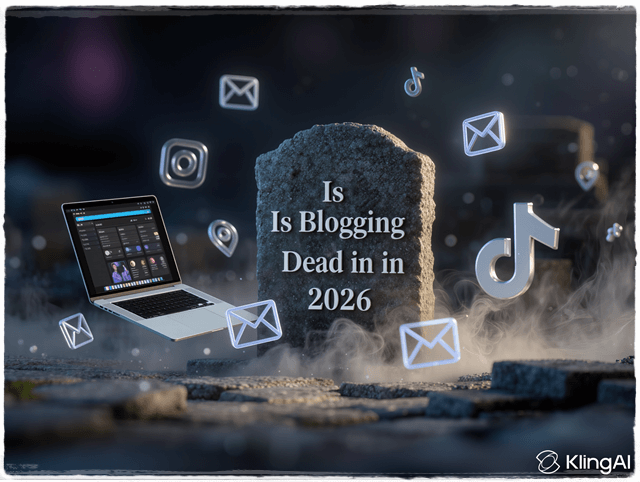
If you’ve spent even a few minutes on Reddit, SEO forums, or creator communities lately, you’ve seen the panic. People ask the question: “Is blogging dead in 2026?” Google is all AI now.” “TikTok is the new search engine.” “No one reads blogs anymore.” And honestly – I get why people feel that way. When traffic clips or another algorithm update rolls out, it’s easy to wonder if all this effort is still worth it.
But let me be straight with you, as someone who’s been doing this for years and actually living off digital content: blogging isn’t dead. What is dead is outdated blogging. The kind where you publish short, keyword-stuffed posts and hope Google does the rest. That era is over – and it’s not coming back.
So when people ask me is blogging dead in 2026, my answer is simple: no – but it has evolved. Today, a blog isn’t just about traffic. It’s your owned platform, your trust builder, and the backbone of everything else you do online. And if you’re willing to adapt, it’s still one of the most powerful assets you can build.
What’s Changed in 2026 – And Why Blogging Feels Harder Than Ever
If blogging feels harder in 2026, you’re not imagining it. The rules didn’t just tweak – they shifted. Not because blogging stopped working, but because how people search, read, and trust content has fundamentally changed. This is where a lot of creators get stuck, and starting asking the question is blogging dead in 2026 – when the real issue is that the environment around blogging has evolved.
Let’s break down what’s actually different.
People Don’t Just Google Anymore
- Googleing when they want detailed, well-structured answers
- Searching TikTok or Instagram for quick explanations and inspiration
- Watching YouTube for step-by-step walkthroughs
- Reading Reddit threads to validate real opinions and live experiences
This doesn’t replace blogging – it raises the bar. Short-form content sparks curiosity, but your blog is where trust is built, questions are fully answered, and monetization actually happens. Think of social platforms as the doorway, and your blog as the room where the real conversation takes place.
AI Changed How Content Is Judged – Not Whether It Matters
AI-powered search interfaces have rewritten how content is evaluated. Thin posts, keyword stuffing, and surface-level answers simply don’t survive anymore.
AI systems now prioritize content that:
- Fully answers a question from multiple angles
- Shows real experience, clarity, and intent
- Is structured, readable, and genuinely helpful
In simple terms: good blogging wins. If your post can be summarized in one generic AI paragraph, it won’t stand out. Depth, nuance, and personal insight are now competitive advantages – not extras.
Your Blog Became the “Depth Layer”
Here’s the shift most people miss. Blogs aren’t competing with TikTok, AI, or YouTube – they’re supporting them.
- Short-form content creates awareness
- AI handles quick summaries
- Blogs provide depth, authority, and conversion
When someone is ready to trust you, buy from you, or follow your long-term advice, they don’t rely on a Reel or an AI snippet. They land on your long-form content. That’s why, despite all the noise, the answer to is blogging dead in 2026 is still no – but lazy, outdated blogging absolutely is.
Engagement and Trust Matter More Than Ever
Search engines now heavily weigh human signals and credibility. Things like:
- Time spent on your page
- Comments, shares, and backlinks
- Clear signs of Experience, Expertise, Authoritativeness, and Trustworthiness (EEAT)
Content that feels robotic or generic fades fast. Content that feels human, useful, and earned performs better over time – even if it takes longer to see results.
The Bottom Line
Blogging didn’t get weaker in 2026 – it got more demanding. People search everywhere, AI filters out low-value content, and trust has become the real currency. If your blog provides depth, clarity, and real-world insight, it doesn’t just survive in 2026 – it becomes your strongest asset.
Why Blogging Still Works in 2026 – And Why It Works Best For
If you’re still asking, “Is blogging dead in 2026?”, it usually comes from one place: frustration. Algorithms feel unpredictable, attention spans feel shorter, and AI makes content creation look “too easy.” But here’s the truth: most creators only realize after burning out on social platforms – blogging didn’t lose its power. It simply stopped rewarding shortcuts.
When done strategically, blogging in 2026 is not just relevant; it’s one of the most stable foundations you can build an online business on.
Your Blog Is An Owned Asset – Not Rented Attention
Let’s start with the most important difference between blogs and social platforms: ownership.
Social media is rented land. Reach can drop overnight. Accounts get shadowbanned. Ad costs increase. Platforms change priorities without warning – and creators pay the price.
Your blog is different.
You own the platform, the content, the traffic, and the relationship with your audience.
That ownership compounds over time. A blog post you write today can still bring in traffic, email subscribers, and sales years from now – especially when combined with email marketing. This is why asking “Is blogging dead in 2026?” misses the point. In a digital world built on instability, owning your platform isn’t optional anymore – it’s strategic.
A blog is your digital home base. Everything else feeds into it.
Blogs Convert Because They Build Trust At The Right Moment
Short-form content is excellent for discovery. It sparks interest. It grabs attention. But ir taely does the heavy lifting when it comes to decisions.
A 20-second Reel doesn’t explain nuances.
An AI snippet doesn’t address objections.
A viral post doesn’t build long-term trust.
A well-written blog post does.
On your blog, you can:
- Walk readers through a real problem step by step
- Compare tools honestly, including pros and cons
- Share personal experience instead of surface-level claims
- Answer the questions people are afraid to ask
- Lead naturally into affiliate offers or digital products
This is why blogs still outperform social posts when it comes to monetization. Social media opens the door. Your blog closes the loop. That’s why experienced creators aren’t debating “is blogging dead in 2026” – they’re using blogs as their main conversion engine.
Your Blog Is The Trust Anchor Of Your Entire Brand
In 2026, trust is the real currency online.
When someone is casually browsing, they scroll.
When someone is ready to buy, they slow down.
That’s when they look for depth, clarity, and proof. That’s when they land on your blog.
Your blog now serves two essential roles:
- The TRust Anchor – Long-form content allows you to show experience, context, and reasoning -things short-form and AI summaries can’t replicate.
- The Revenue Engine – High-intent readers arrive on your blog when they’re ready to choose, subscribe, or invest.
This is where decisions are made. This is where credibility lives. And this is another reason the answer to “is blogging dead in 2026” is a clear no, because trust-driven platforms don’t disappearm they mature.
Who Blogging Works Best For In 2026
Blogging isn’t for everyone – and that’s actually a strength.
It works best for people who value sustainability over constant visibility and prefer building assets over having trends.
Blogging in 2026 is ideal if you are:
- A creator tired of being at the mercy of algorithms
- An affiliate marketer who wants consistent commissions, not spikes
- An online entrepreneur selling digital products or services
- A business owner building an email list and long-term authority
- Someone who prefers depth, clarity, and real connections
If your goal is longevity, blogging becomes less about “wrting Posts” and more about building infrastructure.
How To Optimize Your Blog For 2026 Search & AI
This is where blogging truly separates itself from the noise. Ranking today isn’t about pleasing bots – it’s about serving humans so well that AI systems choose your content.
Think In Topics, Not Isolated Keywords
Random posts don’t build authority anymore. Context does.
Instead of chasing single keywords, build a topic cluster that answers real questions people already ask on Reddit, forums, and communities.
For example:
- “Is blogging dead in 2026?”
- “How bloggers actually make money today.”
- “AI SEO trends creators need to understand.”
When your content connects logically, both readers and AI recognize you as a reliable source – not just another post in the index.
Structure For Humans First, AI Second
Clarity is everything
Use:
- Clear H2 and H3 headins
- Short, readable paragraphs
- Bullet points and tables were helpful
- Direct answers early in the post
AI-powered search thrives on structure – but so do real people skimming for answers. Good structure increases time on page, comprehension, and trust.
Engagement signals Reinforce Authority
Modern ranking systems increasingly pay attention to human behavior.
Encourage:
- Comments and discussion
- Social shares
- Email signups
End your posts with a thoughtful question. Respond to comments. Show presence. One genuine interaction sends a stronger signal than dozens of AI-generated paragraphs ever could.
The Bottom Line
If you’re still womdering is blogging dead in 2026, you’re probably thinking about blogging the old way. Blogging still works – but only when it’s treated as a business asset, not a content chore.
Social media rents attention.
Your blog owns it.
And in 2026, ownership, trust, and depth are exactly what turn content into income.
Blogging Doesn’t Live Alone Anymore – And That’s A Good Thing
One of the biggest mistakes creators make in 2026 is treating blogging as a standalone activity. It’s not. And honestly – that’s exactly why blogging works better now than it ever did before.
A blog post today isn’t just a post. It’s a source asset. A single long-form content can power your entire content system for weeks, sometimes months. When you stop thinking “write → publish → hope,” and start thinking “create once → distribute everywhere,” blogging becomes efficient instead of exhausting.
Your Blog Is Your Hub – Everything Else Is The Spokes
Think of your blog as the center of a hub-and-spoke model.
One well-written blog post can become:
- A TikTok or Reel explaining the core idea
- An Instagram carousel breaking down key takeaways
- A Pinterest pin driving evergreen traffic months later
- A newsletter that deppends trust and connection
- A short thread or post teasing insights and linking back
Your blog holds depth. Social platforms handle discovery. And everything feeds back to your site, where trust, conversions, and ownership live.
This is where many creators get it wrong. They try to create unique content for every platform – and burn out fast. In reality, your blog should do the heavy lifting. Everything else is distribution.
Why Multi-Channel Blogging Wins In 2026
Your audience doesn’t live in one place anymore – and neither should your content.
Some people discover you on TikTok.
Others save your pins on Pinterest.
Some read quietly via email.
Others binge your long-form posts when they’re ready to learn or buy.
Blogging works best when it supports all of these behaviors instead of competing with them.
Here’s how the modern content mix works:
- Social media sparks attention with short, fast content
- Your blog provides depth, clarity, and proof
- Email keeps the relationship alive long-term
Each channel has a job. When they work together, your reach grows without multiplying your workload.
Repurpose Ruthlessly Without Feeling Spammy
Repurposing isn’t laziness – it’s leverage.
That 1,500-3,000-word blog post you worked hard on? It should live quietly on your site.
You can:
- Turn one section into a 30-60 second TikTok tip
- Pull 3-5 insights into an Instagram carousel
- Create a Pinterest infographic linking back to the full post
- Break the article into a short email series
Social platforms become discovery channels. Your blog becomes the destination.
I’ve seen creators revive “struggling” blogs simply by distributing smarter. Same content. New reach. Real results.
Email Is The Backbone – Not An Add-On
If there’s one channel you should never separate from blogging, it’s email.
Algorithms will change. Platforms will shift. Reach will fluctuate.
Your email list doesn’t
Your blog’s primary job in 2026 isn’t just traffic – it’s connection. Use blog posts to encourage email signups with relevant lead magnets, checklists, or short guides. Then use email to bring readers back to your content.
This back-and-forth loop is what future-proofs your business.
Social media may introduce you.
Your blog builds trust.
Your email list sustains everything.
Don’t Be An Island – Be A System
Blogs fail when they’re isolated. They thrive when they’re part of a system.
One creator I know transformed a stagnant blog into a six-figure business by using short-form hooks on TikTok and YouTube Shorts to drive readers back to in-depth blog posts. The traffic wasn’t random – it was warmed up. Conversions followed naturally.
That’s the model that works for you.
Your blog isn’t an island.
It’s a hub.
Social platforms are billboards.
Your blog is the destination.
And your email list is your insurance policy when the next algorithm change hits.
The Takeaway
Blogging doesn’t live alone anymore – and that’s not a weakness, it’s an advantage.
When your blog juels your social content, your social content feeds your email list, and your email list brings readers back to your blog, you stop chasing platforms and start building assets.
That’s how blogging fits into 2026, not as a solo act – but as the backbone of everything you build online.
Common Blogging Struggles In 2026 – And How To Get Past Them
Let’s be honest for a moment. Blogging in 2026 isn’t hard because it “doesn’t work.” It’s hard because the rules are more nuanced, expectations are higher, and shortcuts don’t last anymore. Most frustrations come down to a few very real struggles – and the good news is that all of them are solvable.
“AI Content Feels Soulless” – Because It Is
You’re not imagining it. Readers can spot generic, AI-written content instantly – and they scroll right past it.
The biggest challenge right now is what I call the AI uncanny valley: content that’s technically correct, well-structured, and completely forgettable. It lacks friction, personality, and lived experience.
AI should support your workflow, not replace your voice.
The fxs isn’t abandoning AI – it’s using it correctly:
- Use AI for research, outlining, and idea validation
- Let it help you organize complex topics faster
- But write the final copy yourself
What actually differentiates blogs in 2026 are personal examples, opinions, mistakes, and insights only you can provide. Your stories, your failures, your “this didn’t work and here’s why” moments – that’s what makes people trust you, subscribe, and come back.
That human edge isn’t fluff. It’s your competitive advantage.
“Monetization Feels Complicated” – And That’s The Opportunity
This one is true, too. Monetization is more complex than it used to be – and that’s exactly why it’s more resilient.
In 2026, most successful blogs don’t rely on a single income stream. Instead, they combine several:
- Affiliate content – especially high-intent comparisons and reviews
- Digital products like guides, templates, or checklists
- Courses or memberships
- Email funnels that nurture trust over time
Yes, this requires more thought – but it also means stability. When one stream slows down, another often picks up. That’s a far safer position than relying on ads or one platform alone.
The key is not doing everything at once. Start with one monetization path, refine it, then layer in the next.
The Real Tensions – Speen vs. Substance
AI has made content creation faster – but speed alone doesn’t build authority.
Readers don’t want more content.
They want clearer answers.
They want context.
They want to feel understood.
That’s why value-first blogging still wins. When you solve real problems – especially ones pulled from forums, comments, or actual reader emails – monetization becomes a byproduct, not a struggle.
Another underrated hurdle here is consistency. Posting daily isn’t the goal anymore. One high-quality, well-structured post per week beats daily fluff every time.
Blogging In 2026 Is Still The Foundation
Here’s the bigger picture: blogging hasn’t disappeared – it’s matured.
If you’re building a serious, content-based business, your blog is still the backbone. Not because it’s trendy, but because it’s durable. It’s where authority lives, where trust compounds, ans where everything else connects.
That’s why, despite all the noise, asking is blogging dead in 2026 missed the reality. Blogging didn’t die – it grew up.
Start Here – Simple Action Steps
If you’re feeling overwhelmed, don’t overthink it. Momentum comes from clarity, not complexity.
Start with this:
- Audit your existing content – Refresh outdated posts with 2026 insights, clearer structure, and personal context
- Build around real questions – Use Reddit, forums like Quora, or comments to guide what you write next
- Repurpose strategically – Turn your best posts into social snippets – but always link back
- Strengthen your email list – Every article should invite readers to stay connected
Blogging today is about depth in a world full of surface-level noise. It’s about building something that pays you back over time.
And if you’re willing to adapt, it’s still one of the strongest foundations you can build in 2026.
Conclusion & FAQ
Final Thoughts: Blogging Isn’t Dead – It’s Finally Clear What Matters
So, let’s come back to the question that sparked all of this: Is blogging dead in 2026?
After everything we’ve covered, the answer should feel obvious by now.
No – blogging isn’t dead. But the old version of blogging absolutely is.
The version where you publish thin posts, chase keywords, rely on one traffic source, and hope an algorithm does the work for you? That era is over. What replaced it is something far more intentional, durable, and powerful.
In 2026, blogging is about:
- Owning your platform instead of renting attention
- Building trust instead of chasing clicks
- Creating depth in a world full of surface-level noise
- Connecting content, email, and social into a real system
- Treating your blog as infrastructure, not a side project
That’s why asking is blogging dead in 2026 often signals the wrong problem. The real challenge isn’t that blogging stopped working – it’s that it now rewards clarity, experience, and strategy over shortcuts.
If you’re willing to adapt, blogging becomes more than just content. It becomes your home base. Your trust anchor. Your long-term income engine.
And that’s the quiet truth most panic posts miss: Blogging didn’t disappear. It matured.
If you build with depth, write like a human, and think in systems instead of single posts, your blog won’t just survive 2026 – it will carry everything else you build online.
FAQ
- Is Blogging Dead In 2026 Because Of AI & Social Media? – No, blogging is not dead in 2026, but the way blogging works has changed. AI tools and social platforms now handle discovery and quick answers, while blogs provide depth, trust, and real human experience. When people want detailed guidance, comparisons, or proof before making decisions, they still turn to long-form blog content. AI hasn’t replaced blogs – it has filtered out low-value ones.
- Is Blogging Dead In 2026 For Beginners Starting From Scratch? – No, blogging is not dead in 2026 for beginners, but success now depends on strategy instead of volume. Now bloggers who focus on real questions, niche authority, and helpful content can still grow traffic and income. Starting today actually has an advantage: beginners can build blogs optimized for AI search, topical authority, and multi-channel distribution from day one.
- Is Blogging Dead In 2026 If Google Answers Questions With AI Overviews? – Even with AI Overviews, blogging is not dead in 2026. AI summaries handle simple queries, but users still click through when they want depth, trust, and lived experience. Blogs that include personal insights, case studies, updated comparisons, and clear structure are often cited or used as sources by AI systems – making high-quality blogs more valuable, not less.
- Is Blogging Dead In 2026 For Making Money Online & Affiliate Marketing? – No, blogging is not dead in 2026 for monetization, especially for affiliate marketing and digital products. In fact, blogs convert better than most social posts because they allow space to explain problems, compare solutions, and build trust before a purchase. Whileads alone may pay less, blogs combined with email funnels, affiliates, and products remain one of the most stable income models globally.