Why Video Marketing Inbound Still Matters (More Than Ever)
Video marketing inbound often starts with frustration – and, we’re being honest, you’ve probably felt it yourself.
Have you ever spent hours creating a video you knew was good? You planned it, recorded it, posted it… and then waited. And waited. No views. No clicks. No conversions. That’s quite a disappointment that can make you question whether the video is ever worth the effort.
Here’s the truth most people miss: if your fideos aren’t working, it doesn’t mean you’re bad at video marketing. It means you’re playing by outdated inbounds rules in a digital landscape that has completely changed.
Video marketing inbound hasn’t disaååeared. It has evolved – dramatically. The platforms are different. Attention spans have changed. Algorithms think for us now. And once you understand how inbound video marketing has shifted over time, something clicks. Video stops feeling overwhelming, random, or forced – and starts feeling intentional, strategic, and measurable.
In this article, I’m going to walk you through the real evolution of video marketing inbound: how it worked before, why those strategies slowly lost power, and what actually converts today. No fluff. No hype. Just modern inbound strategies you can apply, whether you’re an internet marketer, blogger, coach, or small business owner who’s tired of creating videos that look fine but don’t move the needle.
What Is Video Marketing Inbound – Really?
Before we dive into platforms, formats, and algorithms, let’s slow down for a moment and get grounded. Because if you misunderstand this part, everything else in your video strategy will feel harder than it needs to be.
At its core, video marketing inbound is not about chasing views or pushing offers. It’s about attracting the right people by helping them first – educating, guiding, and building trust long before you ever ask for a click or a sale.
Inbound video works with human behavior, not against it.
Instead of interrupting people with ads they didn’t ask for, inbound video meets them exactly where they already are – searching, scrolling, learning, or comparing options.
What Inbound Video Is Really Built On
At a practical level, inbund-focused video is designed to:
- Be discovered naturally through search, social feeds, and recommendations
- Build trust before selling anything
- Position you as a helpful guide, not a pushy marketer
- Gently move people toward a decision at their own pace.
This is why inbound video feels different. There’s no pressure. No forced urgency. Just relevance, timing, and value.
But here’s the part most people miss.
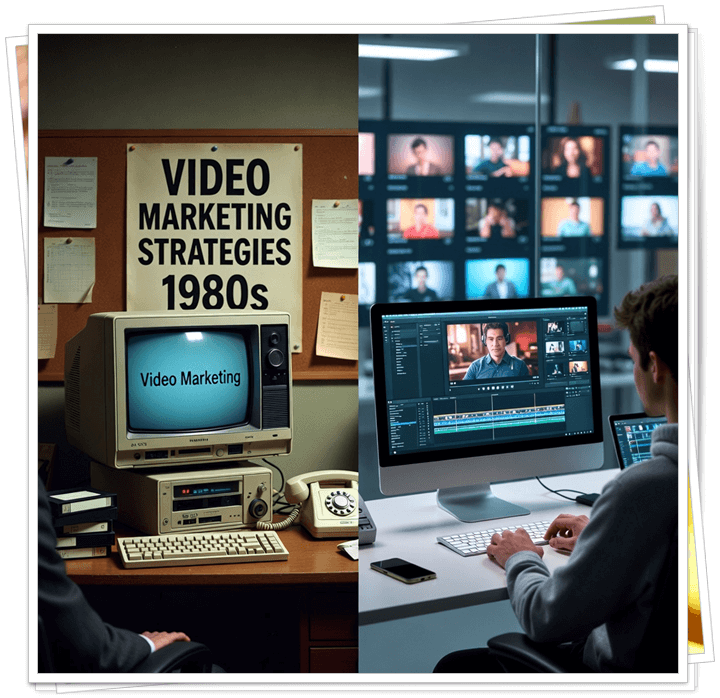
The principles of video marketing inbound are still the same – but the execution has changed dramatically over the years. And to understand what works today, you need to know where it all started.
The Long-Form Era – When Video Was a Destination, Not a Scroll
Let’s rewind to the early days of inbound marketing – pre-2015 – when attention was slower, feeds were quieter, and video felt like a commitment rather than a distraction.
Back then, video wasn’t something you casually scrolled past. You chose to watch it.
If someone clicked play, they usually did it on purpose – often after searching for a specific solution. Internet was high, patience was longer, and trust was built through depth, not speed.
How Inbound Video Worked Back Then
During this era, inbound video followed a very structured formula:
- Platform Focus – YouTube ruled everything. Videos were destinations, not interruptions.
- Content Style – Long-form tutorials, webinars, product demos, and deep educational explainers – often 10 to 20 minutes long.
- Conversion Path – Watch the video → click a static CTA → fill out a form → enter the funnel.
- Production Feel – Polished, formal, and instructional. Clean backgrounds. Scripts. Perfect lightning.
The logic was simple:
“If the content is valuable enough, people will watch.”
And honestly? It worked.
A Quick Reality Check From Back Then
I remember spending entire weekends polishing a single 7-minute tutorial, re-recording voice-overs, tweaking slides, and obsessing over wording. The goal wasn’t virality. It was credibility. We wanted to prove we were the smartest people in the room.
And for that time? That’s exactly what your audience wanted: the full blueprint, laid out step-by-step.
Why This Matters Today
Understanding this era matters because many marketers are still creating videos as if attention hasn’t changed. They’re applying long-form logic to short-form platforms – and then wondering why nothing sticks.
The strategy wasn’t wrong.
The context changed.
Summary
Video marketing inbound has always been about trust, value, and attraction – not interruption. In the early days, that trust was built through deep, long-form content on platforms like YouTube, where viewers arrived intentionally and stayed longer. Those foundations still matter – but how we apply them today looks very different.
And that’s exactly where the next evolution begins.
Video Marketing in the Early Days – When Slow and Steady Actually Worked
If you’ve been around online marketing for a while, this era will feel strangely comforting.
In the early days, video marketing inbound was simple – almost charmingly so. There were fewer platforms, fewer creators, and far less noise. If you took the time to create something genuinely helpful, it often paid off.
Back then, attention spans were longer. Algorithms were basic. And polished authority was trusted by default.
What Worked Back Then
Inbound video during this period followed a very predictable formula:
- Long-form educational videos (10-15 minutes were normal)
- Static talking-head or screen-recorded tutorials
- blog posts paired with embedded YouTube videos
- Minimal editing, simple intros, no fancy cuts
- Keyword-heavy titles and descriptions for SEO
The strategy was straightforward:
Create a helpful tutorial → upload it to YouTube → embed it on your blog → wait for search traffic.
And honestly? Most of the time… it worked.
Why It Worked
This approach thrived because the environment supported it:
- Less competition
- Fewer content creators
- Non-short-form or autoplay distractions
- Search-first discovery instead of feed-based consumption
Inbound video marketing in this era was slow but steady. You weren’t chasing attention – you were meeting demand.
And whether you realized it or not, this era laid the foundation for everything we still do today.
The Shift Begins (2015-2019) – When Attention Got Faster Than Content
Around 2015, something quietly changed.
At first, it didn’t feel dramatic. But looking back now, this was the moment the ground started moving under our feet.
Platforms Changed The Rules
Social platforms suddenly cared less about sending traffic away and more about keeping people inside their ecosystems. That meant prioritizing:
- Native video uploads
- Autoplay in feeds
- Engagement signals (likes, comments, shares)
- Watch time and retention
Text-heavy blog videos and YouTube embeds slowly lost momentum – especially on social media.
The Audience Changed Too
At the same time, viewers became:
- More impatient
- More visually driven
- Less tolerant of rambling intros or filler
If your video didn’t communicate value within the first few seconds, it was gone.
Inbound video marketing during this era started to demand a new skill set:
- Shorter intros
- Clear benefit statements up front
- Faster pacing
- Visible human personality
This was the period where some creators adapted – and others quietly stalled.
Algorithms Get Smarter – Watch Time, Mobile & Native Video
Between 2015 and 2019, the shift accelerated.
YouTube began prioritizing watch time over simple clicks. Facebook pushed native video aggressively, autoplaying it silently in the feed. Instagram introduced Stories, and suddenly, video was everywhere.
This created a major pivot for inbound strategies.
What This Meant In Practice:
- The Hook Became Critical – You had 1-3 seconds to earn attention.
- Sound-Off Viewing Was The Norm – Captions, bold text, and visuals became non-negotiable.
- Retention Mattered More Than Length – A tight 60 seconds could outperform a polished 10-minute video.
This is also when long-form webinars began evolving into tighter, story-driven video sales letters (VSLs). Inbound video could still convert deep in the funnel – but only if it respected attention.
Authenticity Beats Perfection
Perhaps the biggest shift of this era?
Raw started outperforming polished.
Live video exploded because it felt real. Audiences responded to behind-the-scenes clips, imperfect takes, and honest conversations. Video stopped being just an “attract” tool and started building relationships directly on the platform.
The call-to-action evolved, too.
From “Click the link” → to Comment below” or “Tap if this helped.”
Summary’In the early days, video marketing inbound relied on patience, depth, and search intent. Between 2015 and 2019, platforms, algorithms, and human behavior reshaped everything. Attention got faster, feeds replaced search, and authenticity outperformed polished. Video stopped being a standalone asset – and became part of the entire customer journey.
And this shift was only the beginning.
Acceleration & Disruption (2020-2022) – When Video Hit The Fast-Forward Button
Then came the acceleration.
Almost overnight, everything sped up.
More creators.
More platforms.
More noise is competing for the same few seconds of attention.
Between 2020 and 2022, video marketing inbound wasn’t just evolving – it was being stress-tested at scale. Lockdowns pushed people online, screens became our main connection to the world, and video turned from a “niche-to-have” into the default way humans communicated, learned, and built trust.
The Explosion Of Inbound Video Formats
Inbound video was no longer limited to tutorials and blog embeds. Suddenly, your audience was consuming:
- Live video and real-time Q&As
- Stories that disappeared in 24 hours
- Vertical, mobile-first video
- Snackable clips under 60 seconds
- Educational shorts designed to teach one thing fast
Platforms like TikTok, Instagram Reels, and YouTube Shorts rewired how people consume inbound content. Discovery shifted from search to scroll – and attention was now measured in seconds, not minutes.
What Quietly Stopped Working
At the same time, many “best practices” collapsed almost instantly.
What lost momentum during this era:
- Over-polished corporate videos
- Long introductions and logo animations
- “Let me tell you about myself” penings
- Scripted, pitch-heavy sales videos
These formats didn’t fail because they were bad – they failed because they were too slow for a faster world.
What Started Winning Instead
As attention shortened, connection deepened.
Videos that performed best shared a few core traits:
- Raw, human delivery (often filmed on a phone)
- Immediate hooks within the first 1-3 seconds
- Personal storytelling instead of selling
- Teaching from real experience, not theory
Inbound video marketing became less about looking impressive – and more about being relatable.
Authenticity Beats Polish – Goodbye Studio, Hello Smartphone
The pandemic years completely democratized content creation.
You no longer needed a camera crew or expensive gear. Your smartphone, decent lighting, and a clear message were enough. And in many cases. better.
Why Authenticity Became The New Currency:
- TikTok Set The Tone – Short-form, vertical video trained audiences to expect instant value and personality-driven content.
- The “Relatable Expert” Emerged – The studio expert gave way to creators filming from kitchens, home offices, and messy desks. Imperfections build trust.
- Live Video Matured – Lives became powerful nurture tools – allowing real-time interaction, deeper trust, and faster movement through the inbound funnel.
This was the moment when video marketing inbound fully matured into a system, not just a content format.
A short Reel could attract a stranger.
A Story could build familiarity.
A live Q&A could convert a warm lead.
All using video – without “selling”.
Algorithms, Attention & the Short-Form Reality
TikTok’s algorithm changed everything by focusing on behavior, not followers. What you watched, rewatched, or finished determined what you say next.
Other platforms followed fast.
- YouTube launched Shorts
- Instagram pushed Reels aggressively
- Native video was heavily favored over links
The rule was clear:
Retention > reach.
Completion > Length.
A 15-second video watched multiple times could outperform a 15-minute masterpiece.
And here’s the surprising part: even as videos got shorter, conversions often went up. Short-form lived at the awareness and interest stage – where soft value builds trust instead of resistance.
Sunnary
Between 2020 and 2022, video marketing inbound entered its acceleration phase. Platforms, algorithms, and human behavior converged to reward speed, authenticity, and value-first content. Polished production lost ground to real connection,short-form dominated discovery, and video became the glue holding the entire customer journey together.
And once again, everything was about the change – just in a new direction.
Video Marketing Inbound Today (2023–2025)
This is where you’re playing right now – and honestly, it’s the most exciting stage so far.
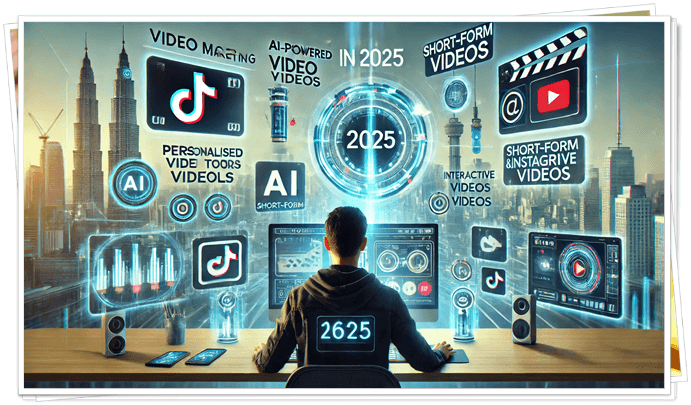
You’re no longer living in a world where one long YouTube video and a blog post can carry your entire funnel. Today, video marketing inbound is fast, story-driven, platform-aware, and supercharged by AI – but still powered by you and your personality.
Modern video marketing inbound today is:
- Short-Form First – Hooks, quick value, strong micro-moments
- Story-Driven – Your experiences, wins, and failures matter more than slogans
- Platform-Native – TikTok, Reels, Shorts, LinkedIn… each with its own “language”
- AI Assisted – Ideas, scripts, captions, and repurposing handled faster
- Human Led – Your face, your voice, your perspective are the trust layer
What Actually Converts Today
Let’s break down what’s working right now – the stuff that actually brings in leads, clients, and customers instead of just views.
- Personal Storytelling Beats Polished Branding – People don’t want generic brand statements. They want your perspective.
Video that starts with:
✔️ “Here’s what failed for me…”
✔️ “I used to struggle with this too…”
✔️ “Let me show you what finally worked…”
These are inbound magnets, because they say: “You’re not alone – and here’s a shortcut.” - Hook-First Thinking – Your video lives or dies in the first 3 seconds.
Before you hit record, ask yourself:
✔️ Would you stop scrolling for this opener?
✔️ Is the benefit instantly clear?
✔️ Does it feel like a real human is talking, not a marketing robot?
If the answer is no, rewrite the hook before you film anything else. - Platform-Native Execution – One-size-fits-all is dead. You can share the same idea everywhere – but not the same file, untouched.
Today’s platform-native basics:
✔️ Vertical Format – For most feeds (TikTok, Reels, Shorts)
✔️ Caption Always – Most people skim before turning the sound on
✔️ Tight Framing – Your face or key visual fills the screen
✔️ Conversational Pacing – Fewer pauses, faster energy, no long build-ups
One video idea. Adapt, not lazily duplicated. - AI As Your Assistant, Not Your Replacement – AI is there to make you faster – not to erase you.
You can use AI to:
✔️ Brainstorm topics based on your audience’s pain points
✔️ Structure scripts and outlines
✔️Generate title and hook variations
✔️ Turn long videos into multiple short clips
✔️ Create transcripts and SEO-friendly descriptions
But the parts that truly convert – the opinion, the story, the nuance – that’s all you.
How To Generate High-Quality, Converting Inbound Videos
If your biggest pain point is “I want videos that actually convert, not just get views,” use this as your simple roadmap.
- Start With ONE Specific Problem – Don’t start with a topic. Start with a struggle.
❌”Video marketing tips”
✅ “Why my videos weren’t converting – and the 3 tweaks that changed everything”
The more specific the problem, the more someone feels: “This is for me.” - Open With Tension – Say the thing your audience is thinking but not saying:
✔️ “You’ve posted 20 videos, and nothing’s happened, right?”
✔️ “Your views are fine, but nobody’s actually buying from your videos.”
Tension is what makes them stay. - Teach Through Experience – You don’t need to be perfect. You need to be relevant.
✔️ Share what you tried
✔️ Show what didn’t work.
✔️ Explain what you changed – and why
People trust “This is what worked for me” much more than “Here’s what experts say you should do.” - End With One Gentle Next Step – Inbound is not pushy. It’s directional.
End each video with one simple next step:
✔️ “Want the full breakdown? Watch the next video.”
✔️ “I wrote an article on this – check the link in my bio.”
✔️ “Save this so you can try it later.”
That’s how trust compounds over time – one small, helpful nudge at a time.
SEO + AI Optimization for Video Marketing Inbound
Your videos don’t just need to feel good—they need to be findable by humans, search engines, and AI systems (like AI Overviews and recommendation engines).
Here are modern best practices:
- Use video marketing inbound naturally in your titles, descriptions, and supporting blog posts (no stuffing).
- Break content into clear sections (problem, solution, steps, summary).
- Add direct answers to common questions (perfect for snippets and AI answers).
- Use natural, conversational language — the way you’d explain it to a friend.
- Include a short written summary or key points under the video for skimmers.
For deeper inbound methodology and structure, HubSpot is still one of the strongest reference points in this space.
Quick Wins You Can Implement This Week
- Record 3 short videos that start with “Here’s what failed for me when I tried…”
- Turn your best-performing blog post into 5 Reels or Shorts using AI help.
- Add captions and a clear, benefit-driven title to every new video.
- Map each video to a funnel stage: Attract, Engage, or Convert.
- Review analytics weekly and double down on the hooks that keep people watching.
Short Summary
Right now, video marketing inbound is all about short-form, story-driven, platform-native content supported by smart AI workflows—but anchored in your human voice. What converts isn’t the fanciest camera or the most polished branding. It’s clear hooks, honest stories, specific problems, and gentle next steps that make people feel understood—and ready to keep moving with you.
Conclusion – Your Next Chapter With Video Marketing Inbound
If you’ve read this far, you already know something important about yourself: you’re not just “testing video.” You’re serious about making video marketing inbound a real growth engine in your business.
You’ve seen how it started:
- Slow, intentional, long-form videos on YouTube
- Search-first discovery and steady, predictable traffic
- Polished tutorials and formal presentations
You’ve watched it shift:
- Platforms changing the rules
- Algorithms reward watch time, engagement, and native uploads
- Authentic, imperfect content outperforming glossy studio productions
And you’ve arrived in today’s world:
- Short-form, story-driven content
- Platform-native videos across TikTok, Reels, Shorts, and LinkedIn
- AI helping you plan, script, clip, and optimize — while you stay the human voice people connect with
The core hasn’t changed. Video marketing inbound is still about helping the right people find you, trust you, and choose you—without feeling pressured or interrupted. What changed is how you show up: faster, clearer, more personal, and more strategic.
So where do you go from here?
You don’t need a studio.
You don’t need a viral hit.
You don’t need to be “good on camera” from day one.
You need:
- One specific problem your ideal audience is struggling with
- One honest story about how you faced it yourself
- One short, clear video that teaches them something useful
- One gentle next step that keeps the relationship moving
That’s it. That’s the real work.
If you start there—one problem, one story, one video at a time—you’re no longer “posting and hoping.” You’re building an inbound system that compounds: more trust, more views, more subscribers, more clients who already feel like they know you.
So the next time you think, “Is this video even worth it?” remember this: your audience doesn’t need perfection. They need you—your voice, your experience, your perspective—delivered in a format that fits how they live, scroll, and decide today.
Hit record. Tell the truth. Help someone.
That’s how modern video marketing inbound works—and your best videos are still ahead of you.
FAQ – Video Marketing Inbound
- What is video marketing inbound, and how is it different from traditional video marketing? – Video marketing inbound is a strategy focused on attracting, educating, and building trust with your audience before selling anything. Instead of interrupting people with ads, inbound video meets them where they already are—on search engines, social feeds, or content platforms—and guides them forward with value.
Traditional video marketing often pushes products directly through ads or scripted sales videos. Video marketing inbound, on the other hand, uses helpful content, personal stories, and education to turn viewers into leads and customers naturally over time.
- Does video marketing inbound still work in 2025 with short attention spans? – Yes—video marketing inbound actually works better today than ever before, but the execution has changed. Attention spans are shorter, which means inbound videos must deliver value quickly through clear hooks, concise storytelling, and platform-native formats.
Short-form videos for awareness, combined with mid- and long-form videos for trust and conversion, create a complete inbound system that aligns perfectly with how people consume content in 2025.
- What type of videos convert best with video marketing inbound today? –
The highest-converting inbound videos today are:
✅ Short-form, vertical videos with a strong hook in the first 3 seconds
✅ Story-driven videos based on real experiences and lessons learned
✅ Educational videos that solve one specific problem clearly
✅ Authentic, human videos filmed with simple setups (often just a phone)
Videos that start with relatable struggles and teach through experience consistently outperform overly polished brand videos in modern video marketing inbound strategies. - How do I optimize video marketing inbound content for SEO and AI systems? – To optimize video marketing inbound for both search engines and AI systems, focus on clarity, structure, and natural language:
✅ Use the focus keyword naturally in titles, descriptions, and summaries
✅ Answer specific questions directly in your content
✅ Add clear headings and short summaries under videos
✅ Include transcripts or captions for accessibility and indexing
✅ Write the way people actually speak—AI systems prioritize conversational content
This approach increases visibility in search results, featured snippets, and AI-driven recommendations like AI Overviews.
Note: This article is a rewritten and fully updated version of an older post. It has been refreshed to reflect how video marketing inbound works today, with modern strategies, platforms, and real-world practices that match the current digital landscape.
Disclosure: This article may contain affiliate links. That means if you click a link and choose to make a purchase, I may earn a small commission—at no extra cost to you. I only recommend tools and resources I genuinely use or believe add real value to your video marketing inbound strategy.